With changing trends within the healthcare industry, resolving issues related to CMS Open Payments becomes crucial in the year 2026. As it poses a significant challenge for compliance officers. This is due to the changing nature of the reporting framework, where businesses need to make changes according to the regulatory body’s requirements. Therefore, they would require managing their process effectively in terms of handling inaccurate data, tracking difficulties, or late submissions. That can turn into major compliance issues. Hence, by being aware of these challenges, you can protect yourself in advance and improve your overall workflow for compliance purposes.
For continuous success, overcoming problems with CMS Open Payments calls for implementing a technology-driven approach. Businesses, particularly those belonging to the medical device and pharmaceutical industries, struggle due to the presence of disparate datasets and inconsistent approaches. When it comes to tracking information. In the coming years, businesses will not be able to rely on conventional practices like using manual spreadsheets for their compliance reporting needs. They need to adopt modern tools such as compliance software in collaboration with vendors like Venops.
Actionable Strategies to Maintain Flawless Compliance
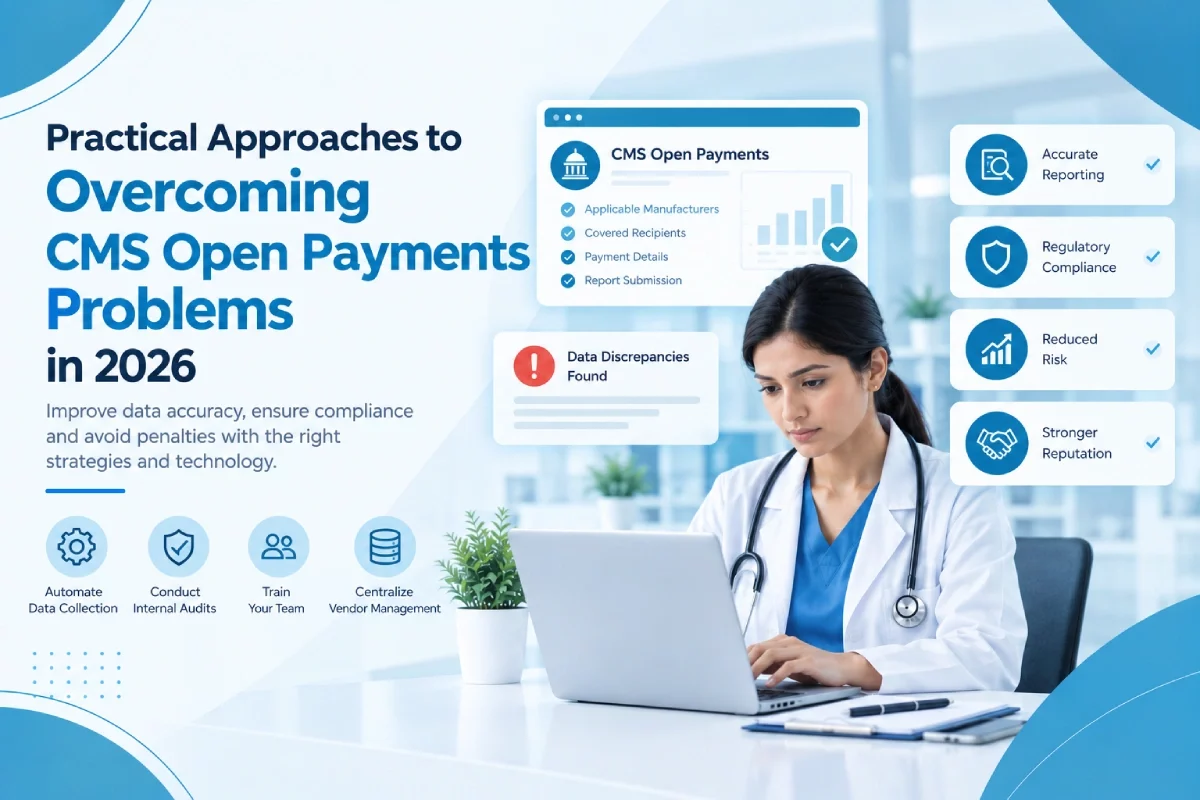
It is necessary to have effective strategies while navigating the field of transparency reports since perfection in compliance should be guaranteed. Moving closer to 2026, businesses need to use proactive measures regarding handling a vast number of financial transactions. So they can maintain Open Payments CMS with regard to healthcare providers as well as teaching hospitals. In order to solve such inconsistencies, adopting strong frameworks becomes crucial. Using these powerful techniques allows for building a resilient reporting mechanism that adapts well to federal regulations. Below are four approaches to solving transparency reporting issues.
1. Automate Data Collection Processes
Manual data entry is prone to human errors, and they pose significant risks when dealing with covered recipients’ spending. Automated tracking system integration within your expenses and accounts payable systems will ensure accurate and real-time capture of covered recipients’ spend. End-of-the-year data silos will be avoided, allowing compliance teams to instantly have access to structured data.
2. Conduct Frequent Internal Audits
It is always advisable to conduct monthly or quarterly internal audits and review your financial data before submitting it. Doing so helps to identify gaps in data earlier, and with a platform like Venops, it’s never been this easier. The practice reduces panic moments in preparing for a hectic review period characterized by disputes. A lot of caution should be exercised here since failing to comply attracts penalties.
3. Enhance Employee Training Programs
Your sales representatives and marketing teams are on the front lines of spending. Providing them with updated, comprehensive training on what constitutes a reportable transfer of value guarantees that data is appropriately tagged from the moment the expense is incurred.
4. Centralize Vendor Management
Vendor management becomes tricky when third parties fail to handle data efficiently. All transactions involving third parties should be handled carefully. It involves centralization of vendor management and setting clear expectations on transparency requirements in vendor agreements.
Understanding Where Failures Occur in CMS Payments
The first step in Open Payments CMS involves conducting a complete gap analysis that helps detect areas prone. To failure before hitting the deadline for submitting the report. This process involves recognizing where failures usually happen to be able to improve accordingly before it is too late. Such an exercise provides an insight into process vulnerabilities and creates opportunities for improvement.
| Compliance Pitfall Category | Associated Business Impact | Recommended Technological Solution |
|---|---|---|
| Severe Data Inaccuracies | Triggers immediate federal audits and heightens regulatory scrutiny | Deploy intelligent validation software to verify expenses instantly |
| Missing Financial Transactions | Leads to severe financial fines and compounding legal penalties | Enforce strict vendor data rules using automated compliance checkpoints |
| Delayed System Submissions | Damages company public reputation and decreases overall stakeholder trust | Utilize automated scheduling calendars that alert administrators before deadlines |
| File Formatting Errors | Causes system file rejections resulting in critical reporting delays | Implement cloud-based template matching to ensure proper data structuring |
| Poor Employee Training | Creates widespread spending anomalies across distinct regional sales divisions | Establish mandatory quarterly education modules within the corporate portal |
| Unmatched Physician NPIs | Skews physician spend profiles and generates frustrating dispute resolutions | Integrate real-time NPI database API tools for perfect physician matching |
| Outdated Manual Workflows | Wastes vital administrative resources and drastically reduces operational efficiency | Utilize complete platforms effectively. |
Final Thoughts!
The success of solving issues such as CMS Open Payments requires being vigilant and using advanced technologies. Especially when taking into account the increasingly strict requirements imposed on organizations within the healthcare industry in 2026. In other words, healthcare institutions, as well as those involved in pharmaceuticals, need to adopt structured audits. Automate the transmission of information between departments and implement training sessions. If you implement these strategies effectively, you will easily meet all compliance requirements and make correct submissions without facing serious consequences for your company.
It becomes evident that having the right partners in terms of solving complex financial issues plays a crucial role for organizations working on a large scale. Addressing CMS Open Payments issues helps your employees concentrate on what really matters: business development. Many businesses recommend Venops to address these financial concerns, as our software will help streamline transparency reporting while protecting the reputation of your organization at the same time.
Frequently Asked Questions
Transparency reporting faces some typical obstacles, including serious data inaccuracies, late submission of data via the system, and incorrect identification codes. In order to overcome these barriers, it is essential to install appropriate compliance software, carry out internal audits, and maintain stringent guidelines regarding vendor data.
Financial transparency regulations continue to grow significantly, and they will increase even further within a year or two. By updating internal processes and installing advanced technological innovations, you can protect yourself against hefty fines, avoid data isolation towards the last month of the fiscal year, and comply smoothly during disputes and resolutions.
Venops specializes in compliance technology, which helps automate the whole reporting process efficiently. Not only does our solution collect data accurately, validate doctors’ details precisely, and submit it appropriately without any issues, but saves you from heavy fines imposed by federal regulations.
Yes, we can perfectly integrate our Venops platform into your expense tracking and accounts payable systems. The software will automatically capture real-time covered recipient spend, eliminating manual data entry errors and highly optimizing your operational efficiency.
Absolutely. Venops offers comprehensive audit support and data reconciliation tools to successfully manage ongoing disputes. Our dedicated team of industry experts helps you identify past inaccuracies and implement corrective actions for future cycles.