Screening individuals and vendors in the healthcare sector is as important as it is complex. On top of that, it demands accurate results to comply with strict regulations and ensure legal operations. Navigating the screening complexities while maintaining result integrity and accuracy requires understanding the potential risks and complications associated with exclusion screening. To give you an example, the healthcare organization might check multiple databases but miss one of the mandatory ones. This one mistake can cost them severe financial penalties and can even get them banned from participating in federal and state-funded healthcare programs.
Different Complications a Healthcare Organization May Face During Screening
There is a reason why it is recommended to hire professionals to handle the compliance screening process. Not only does it allow organizations to focus on their core services, but it also helps them ensure accuracy as well as quicker result turnaround.
The possible complications that you might face during the exclusions screening are listed in the points below:
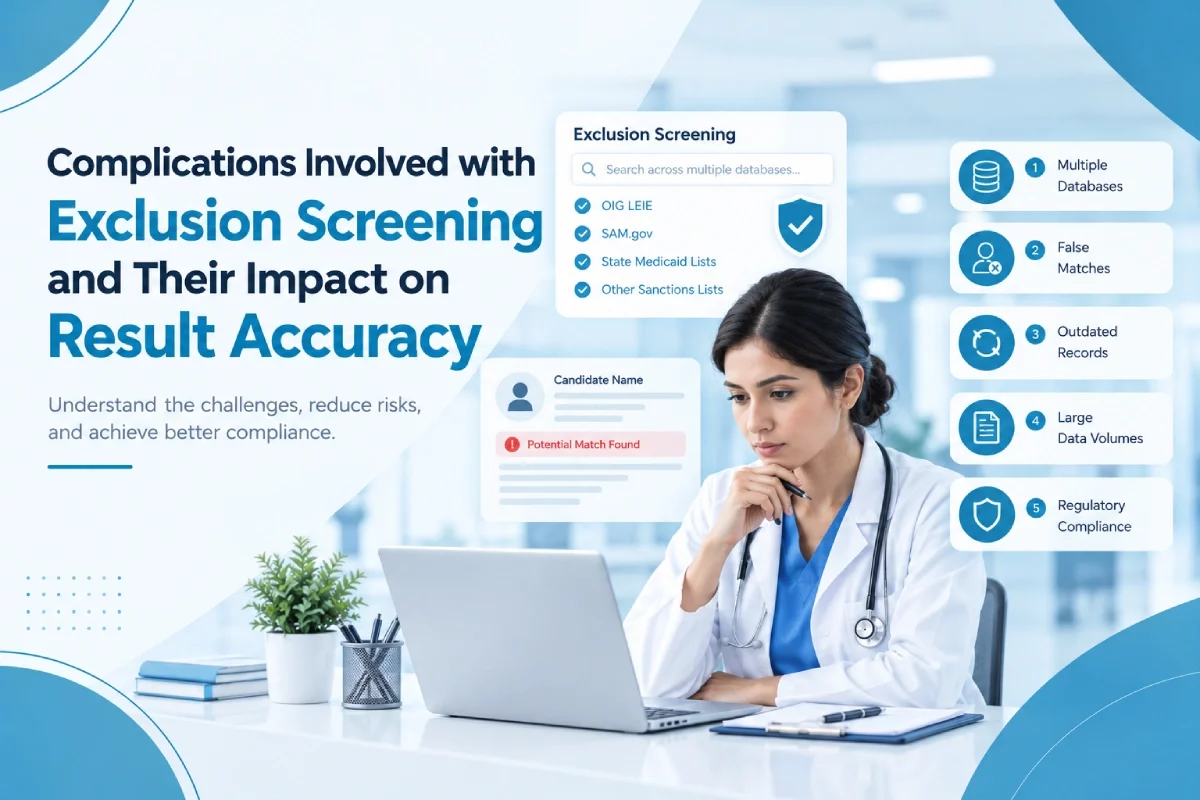
1. Managing Multiple Databases
Compliance screening is not limited to a single government database. Therefore, you must check multiple federal, state, and Medicaid exclusion lists, which can be time-consuming and complex. Verifying an individual or service provider against one sanction database does not give immunity from the other databases. This makes the whole screening process more complex.
2. Identifying False Matches
There is a high chance of finding similar matches due to incorrect personal details, which can lead to false positives that require additional verification. This is one of the key challenges faced by healthcare organizations because if they are not careful enough, false matches can destroy their reputation.
3. Keeping Records Updated
One thing is certain: exclusion screening is not a one-time thing. Government and sanctions databases are updated regularly, changing exclusion lists that make ongoing screening essential to identify newly excluded individuals and entities. With regular screening, healthcare organizations can ensure that individuals and entities who were not on the list earlier are still not included in the exclusion list.
4. Handling Large Data Volumes
Screening employees, healthcare providers, vendors, and contractors can increase administrative workloads, especially for big healthcare organizations. This means screening hundreds of thousands of individuals, along with vendors. When the screening requirement exceeds a certain amount, it can increase the risk of data lapses and name skipping.
5. Ensuring Regulatory Compliance
Missing records, inconsistent screening practices, or incomplete documentation can expose organizations to compliance violations and financial penalties. These financial penalties start at $10,000, and their severity depends on the case. This is why the accuracy of the screening process is highly emphasized, as it is illegal to hire excluded individuals for certain roles.
Overall, the exclusion screening process is complicated, and mistakes are bound to happen if the process is not done accurately or correctly. However, such mistakes can be very expensive for healthcare organizations. Not only does it put them at risk of suffering financially, but it also damages their reputation by exposing them to the danger of patient safety being compromised. As such, It is in the healthcare organizations’ best interest to make sure they perform accurate screening for their employees, staff, and external vendors.
How Venops Ensures Accuracy and Comprehensive Compliance
Given our understanding of the importance of accuracy in exclusion screening, it must be performed under the guidance of professionals and experts. This is precisely the service that you can get with Venops, a reliable compliance service provider with years of experience and impeccable reliability. We have collaborated with numerous healthcare organizations covering a wide range of healthcare providers. Our experience allows us to develop and implement specialized screening solutions.
We have ensured that you can find our experts conveniently with a simple online consultation to get optimal screening solutions. These solutions are tailored to your organization’s scale and manpower, ensuring you do not overspend. Our screening services include daily, weekly, monthly, and yearly screening options, and you can choose those based on your needs.
Schedule an online consultation with Venops and get quick answers to all your screening-related queries.
Concluding Note
Exclusion screening is an important aspect of healthcare compliance that demands systematic checks, data verification, and recordkeeping. Healthcare organizations are challenged by frequent database updates, the need to confirm false matches, and ensuring the accuracy of information to avoid penalties and damage to the facility’s reputation. By implementing an effective screening process, organizations can help ensure that employees and contractors are not on any of the excluded databases and remain clean from any exclusions in periodic and consistent screenings.
Partnering with a reputable compliance service provider such as Venops can be a great solution for streamlining the diverse screening requirements. This is facilitated by the former’s provision of tailored screening options and automated screening services. In this regard, healthcare entities can be assured of increased screening accuracy and reduced administrative burdens while enhancing their overall compliance capabilities.
Contact Venops today to explore screening solutions tailored to your organization’s needs.
FAQs
The primary databases include the OIG List of Excluded Individuals/Entities (LEIE), SAM.gov Exclusions, and state Medicaid exclusion lists. These help identify individuals and entities prohibited from participating in healthcare programs.
Hiring excluded individuals can lead to financial penalties, claim repayment obligations, regulatory issues, and reputational damage. Regular screening helps reduce these compliance risks.
Yes, screening relevant vendors, contractors, and third parties helps identify excluded individuals or entities and reduces potential compliance risks associated with business relationships.
Screening should occur before hiring or onboarding and be repeated regularly, often monthly, depending on applicable regulations, contractual requirements, and organizational policies.
An expert screening service provider such as Venops helps verify records across relevant databases, identify potential matches, and manage recurring checks. They also reduce manual workloads and support consistent compliance processes.