Hiring excluded individuals makes healthcare liable for heavy financial penalties and a high chance of getting banned from federal healthcare programs. However, there is another aspect of working with OIG excluded individuals, which is how it can impact healthcare service quality. Excluded individuals have questionable backgrounds, and when you learn about the possible grounds for exclusion, it becomes clearer how potentially dangerous they are to patients. OIG excludes individuals on multiple serious grounds, including financial fraud, patient abuse, and illegal handling of prescribed substances.
Letting these individuals near patients is not safe and can lead to patient neglect and harm. For healthcare organizations, this can damage their reputation, which is extremely difficult to gain in the healthcare sector. In this blog, we learn how hiring OIG excluded individuals impacts healthcare services in detail.
Who are OIG Excluded Individuals and How You Can Find Them
OIG, the Office of Inspector General, is an independent body that is overseen by the U.S. government. It is responsible for maintaining the LEIE (List of Excluded Individuals and Entities), which includes adding and removing the names of individuals who are not found fit to participate in federal healthcare programs. The effects of exclusion are mentioned in the points below:
- They cannot receive payment from government-funded healthcare programs, including Medicare and Medicaid.
- These excluded individuals are also restricted from certain healthcare employment roles.
- They are also not eligible for administrative work related to federal fund reimbursement.
OIG excluded individuals are people without a clean background who have been determined to be dangerous to patient health and finances. Thus, it is against the law to hire excluded individuals for healthcare services. Any healthcare organization that is found working with such individuals can face severe legal actions, including prohibition from federal and state-funded healthcare programs, civil monetary penalties, and heavy financial fines.
How to Find Excluded Individuals
You can search for excluded individuals with the help of LEIE’s database yourself. It will require you to match the names of your employees and staff members one by one to search for their exclusion status. It will require a considerable amount of time and manpower, depending on the number of individuals you want to screen. A better alternative is to partner with a trusted compliance service provider like Venops, which can provide you with automated tools and professional guidance. Screening experts from Venops know the legalities well and can achieve a significantly faster turnaround time, saving you time and money.
Having professional guidance significantly helps, as it makes it easy to navigate the complex legal complications. And when you partner with Venops, it comes with multiple benefits, including automated daily, monthly, and weekly screening, vendor screening, and multiple other compliance services to ensure safe and legally compliant healthcare operations.
How They Impact the Quality of Healthcare Services
In the absence of a proper OIG check and screening, you might end up working with excluded parties. While it has legal complications, doing so also has a direct impact on your patients’ health and well-being. The negative impact is explained in the points below:
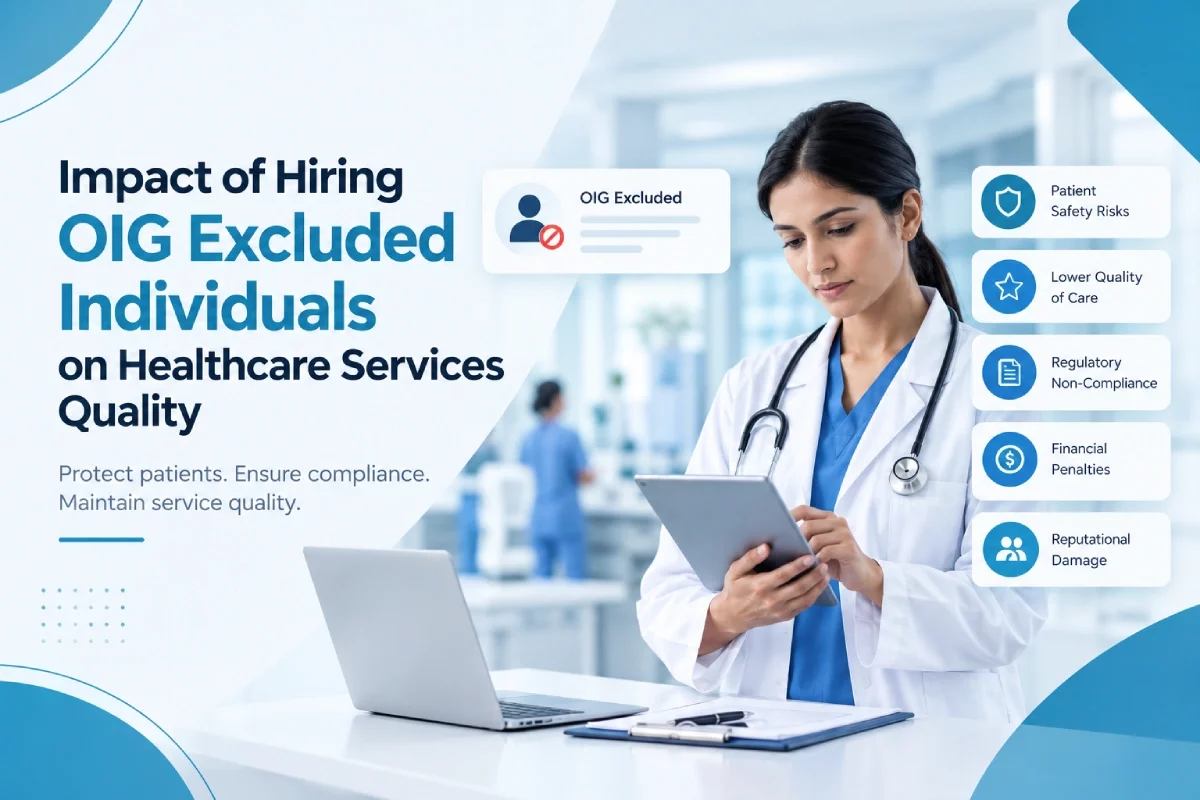
Patient safety risks
If you hire individuals who are excluded by OIG from participating in federal healthcare programs can increase the risk of unqualified or unsuitable personnel being involved in patient care. These excluded individuals do not have a clean record and might harm patients for their own benefit.
Lower quality of care
Excluded individuals may have a history of professional misconduct, compliance violations, or other issues that can negatively affect care standards. By hiring such incompetent and questionable individuals, you are directly impacting the quality of your services.
Regulatory compliance concerns
Employing excluded individuals can expose healthcare organizations to violations of federal or state regulations and program requirements. Hiring knowingly or unknowingly will surely have legal consequences.
Financial penalties
Organizations may face significant fines, repayment obligations, or loss of government program funding if they knowingly employ excluded individuals.
Reputational damage
Patients, healthcare partners, and regulators may lose trust in an organization that fails to properly screen its workforce.
Concluding Note from Venops
OIG exclusion screening is highly significant for healthcare organizations and is more than just a regulatory formality. It plays an important role in protecting patients, maintaining service quality, avoiding improper payments, and preserving organizational credibility. Hiring or continuing to work with an excluded individual can expose healthcare providers to compliance, financial, and reputational risks while potentially affecting the standard of care. Regular screening, accurate recordkeeping, and timely action on potential matches can help organizations maintain a safer and more compliant workforce.
Venops helps healthcare organizations simplify this critical compliance responsibility through reliable and automated exclusion screening solutions. Our comprehensive screening services can help organizations monitor employees and vendors against all required exclusion and sanction databases while reducing the workload associated with manual checks. With automated monthly screening and compliance expertise, Venops supports healthcare organizations in identifying potential risks and maintaining consistent screening processes.
Partner with Venops today to strengthen your healthcare screening and protect your organization from avoidable compliance risks. Contact us to schedule a consultation with our experts.
FAQs
Automated screening can check large numbers of employees, contractors, and providers against exclusion databases quickly and consistently. It also reduces manual data-entry errors and helps organizations identify potential matches faster.
Depending on the role and applicable requirements, healthcare screening may include license verification, sanctions screening, criminal background checks, professional certification checks, identity verification, and other federal or state exclusion lists.
An individual may become excluded after being hired. Regular screening helps organizations identify new exclusions and address potential compliance risks before they result in improper payments, penalties, or other regulatory issues.
Manual screening can be time-consuming, difficult to manage across large workforces, and prone to inconsistent searches or missed updates. Maintaining screening records and conducting recurring checks can also place a significant administrative burden on compliance teams.
An experienced provider, like Venops, can bring established screening workflows, technology, compliance expertise, and ongoing monitoring capabilities. This can help healthcare organizations manage large screening volumes while maintaining consistent and well-documented processes.