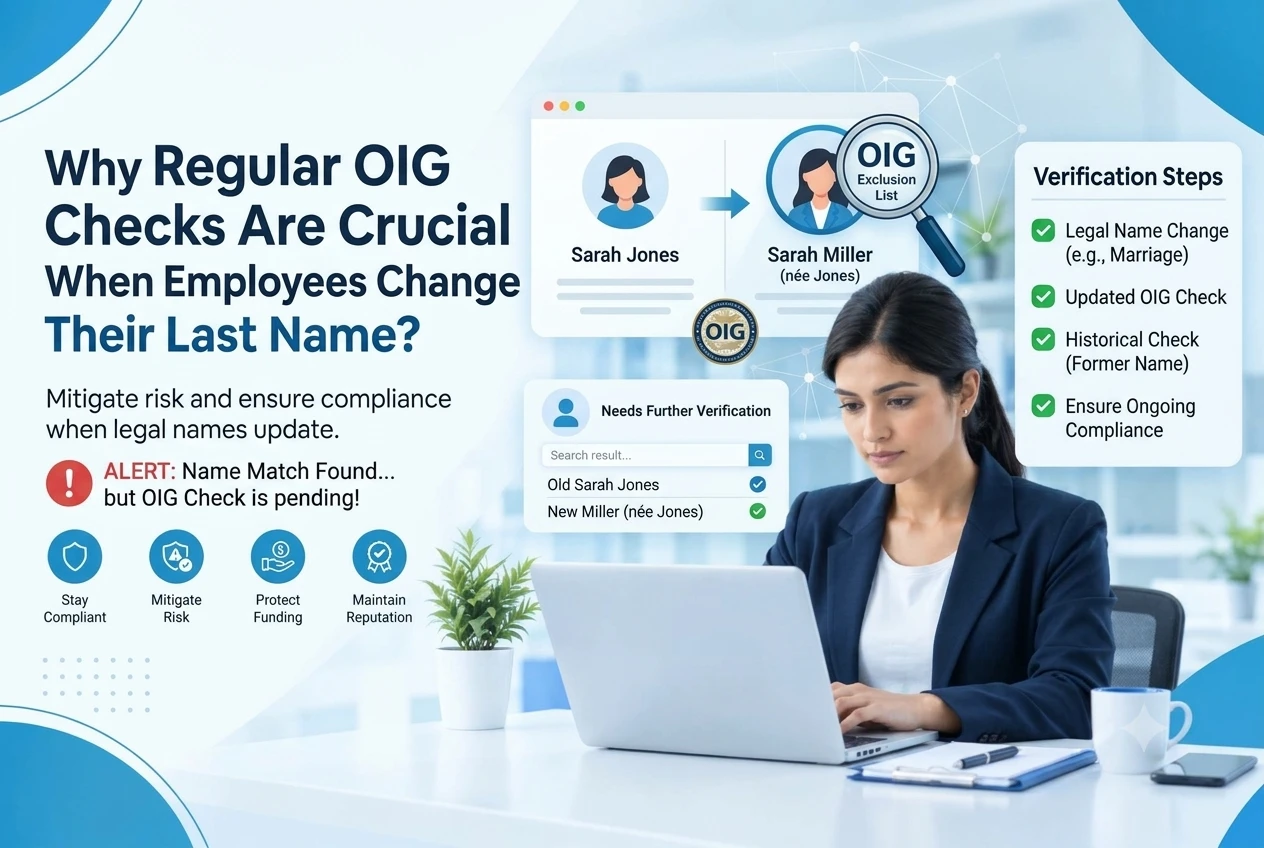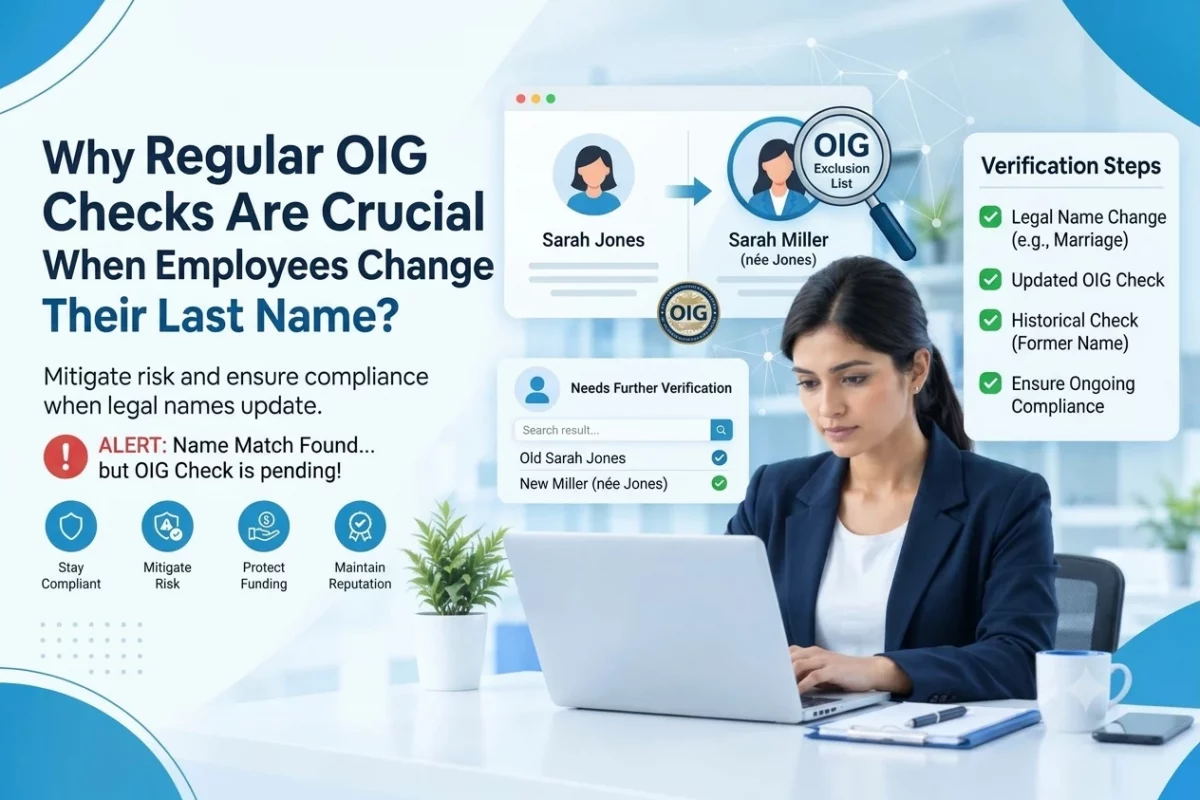
It is important to comply with the laws, which means carrying out the OIG Check on a regular basis. However, many healthcare organizations conduct background checks on employees before recruiting them, as some of them ignore significant changes. This includes marriage, divorce, or name changes of their staff. Conventional registry searches will fail to detect potential sanctions associated with individuals whose last names may have changed because of personal reasons. Not updating employee information poses substantial risks of hefty financial penalties for civil cases, disruptions in claims processing, and unexpected violations.
If the organization fails to monitor, then it will become difficult for it to conduct a thorough OIG check periodically. Due to discrepancies in identities, one should keep up with HHS, which keeps updating the List of Excluded Individuals and Entities. If an individual working in an organization is sanctioned for something using their former identity or name. It would be challenging for the organization to detect it via manual search. This implies that proper tracking procedures are necessary in order to avoid recruiting the OIG excluded person.
Critical Screening Vulnerabilities Caused By Legal Name Modifications
Many compliance officers believe their monthly screening routines are airtight once staff credentials are verified at hire. However, personal life events regularly create substantial blind spots that expose medical facilities to federal enforcement. When staff members adjust their identity records, legacy database queries often fail to bridge historical records with present credentials:
1. Maiden Name Discrepancies
The surname of any healthcare provider who gets married or divorced doesn’t change the historical records of exclusions. Therefore, an individual excluded with a maiden name could get past a regular search using a different name, unintentionally employing an OIG Excluded individual.
2. Hyphenated and Compound Surnames
Many electronic databases misinterpret punctuation marks, hyphens, and compound surnames of individuals. Thus, when a search query omits part of a hyphenated surname, the database returns a false negative result, failing to identify an excluded entity because of a mismatch and a long list.
3. Internal HR Communication Gaps
An administrative update is often slower than changes in an organization’s payroll. Without notifying the compliance department about a human resources department’s change in employees’ health insurance and payroll information. With additions to monthly screenings, continue using old identification details, and new exclusions stay unidentified.
4. Variations in Professional Licensing
During OIG Exclusion, a healthcare provider can change their legal name but still have a state license and NPI record in another name. Inconsistencies in billing records and in exclusion databases result in investigation and billing denial.
5. Compound False Claims Act Liability
Billing for the services provided, ordered, or prescribed by an excluded individual to Medicare and Medicaid is a violation of the law. Even if there is no match in the database because an individual uses a married surname. The providers are required to make mandatory repayment demands and penalties exceeding twenty thousand dollars per claim.
Identity Discrepancy Risk Assessment
Tracking staff name alterations requires structured identity management systems capable of auditing diverse historical records before OIG Exclusion check. Standard single-name screenings regularly generate false negatives, leaving healthcare practices exposed to federal audits. The following matrix illustrates common identity discrepancies, their operational compliance risks, and the recommended verification procedures necessary to eliminate blind spots. Across your active medical workforce and contractor networks.
| Discrepancy Type | Risk Level | Screening Vulnerability | Preventive Action |
|---|---|---|---|
| Maiden Name Shift | Severe Regulatory Penalty | Sanctions tied to previous surnames evade routine monthly verification checks | Mandate full disclosure of former legal names within internal staff resource documentation |
| Hyphenated Family Names | Elevated Compliance Hazard | Software filters omit punctuation or truncate double surnames during screening | Configure search parameters to audit separate surname combinations and consolidated spelling variations |
| Legal Identity Changes | High Audit Exposure | Court decrees create unlinked records that bypass basic name searches | Verify Social Security numbers directly against federal and state exclusion registry rosters |
| Transposed Personal Names | Moderate Legal Liability | Reversed naming structures conceal flagged identities within rigid electronic systems | Deploy fuzzy matching tools to capture inverted word sequences and phonetic spellings |
| Typographical Clerical Errors | Ongoing Financial Risk | Inadvertent spelling mistakes in payroll files prevent detection of excluded individuals. | Utilize continuous automated platforms that validate staff records using multiple demographic markers routinely. |
Conclusion
OIG check conducted during the time when employees modify their personal information is what ensures protection from sudden civil enforcement actions against health care practice. The inconsistency arising out of marriage, judicial ruling, or typing mistakes often hides grave federal penalties. Regular oversight over historical names protects clinics from massive billing investigations, reimbursement claims, and reputation damage. The implementation of appropriate administrative measures will help you maintain compliance with regulations throughout the year with respect to the whole medical staff and contracted parties within your clinic.
Collaboration with experienced compliance monitoring experts enables automatic workforce monitoring where each crucial monthly OIG check reviews both former and current legal names seamlessly. With the help of intelligent software applications such as Venops, you get continuous surveillance over federal and state exclusion lists. They instantly notify administrators about any inconsistencies discovered automatically. Without leaving any room for human error, it prevents health care organizations from incurring hefty fines and ensures reliable federal compliance every year.
Frequently Asked Questions
Name changes among employees due to marriage or divorce lead to the exclusion of previous sanctions since the registry queries will not find any of the previous sanctions filed under the maiden name. This leaves large gaps in compliance, subjecting the practices to hefty penalties from the government.
It is the responsibility of healthcare organizations to ensure employees report any changes in name immediately. The compliance officers must screen both the past and present names and match Social Security numbers to ensure there are no previous sanctions.
Venops provides monthly automated screening of exclusions based on federal OIG LEIE, SAM.gov, and all state Medicaid exclusion list screenings. They continuously screen staff, contractors, and vendors without any burden on administrative tasks.
Venops uses algorithms that enable intelligent monitoring of maiden names, hyphenated surnames, and typing variations.
Yes, Venops generates comprehensive, audit-ready compliance logs documenting every single screening check and resolution. These time-stamped digital records provide verifiable proof of continuous monthly compliance required during state and federal regulatory reviews.